Hiring a freelancer or an agency for accessibility work depends on project scope, budget, and the type of deliverable required. Freelancers typically cost less and work directly with the client, making them a strong fit for focused audits, single-page reviews, or remediation guidance. Agencies bring larger teams, formalized processes, and the capacity to cover enterprise projects, multiple digital assets, or ongoing compliance programs. Both can produce quality work. The right choice comes down to what the project actually needs.
| Factor | Freelance | Agency |
|---|---|---|
| Cost | Lower hourly and project rates | Higher rates reflecting overhead and team |
| Scope fit | Single audits, smaller projects, focused work | Multi-asset programs, enterprise portfolios |
| Turnaround | Depends on individual capacity | Faster when teams divide the work |
| Process | Direct, flexible, less formal | Documented workflows, project managers |
| Accountability | One person owns the outcome | Distributed across team members |
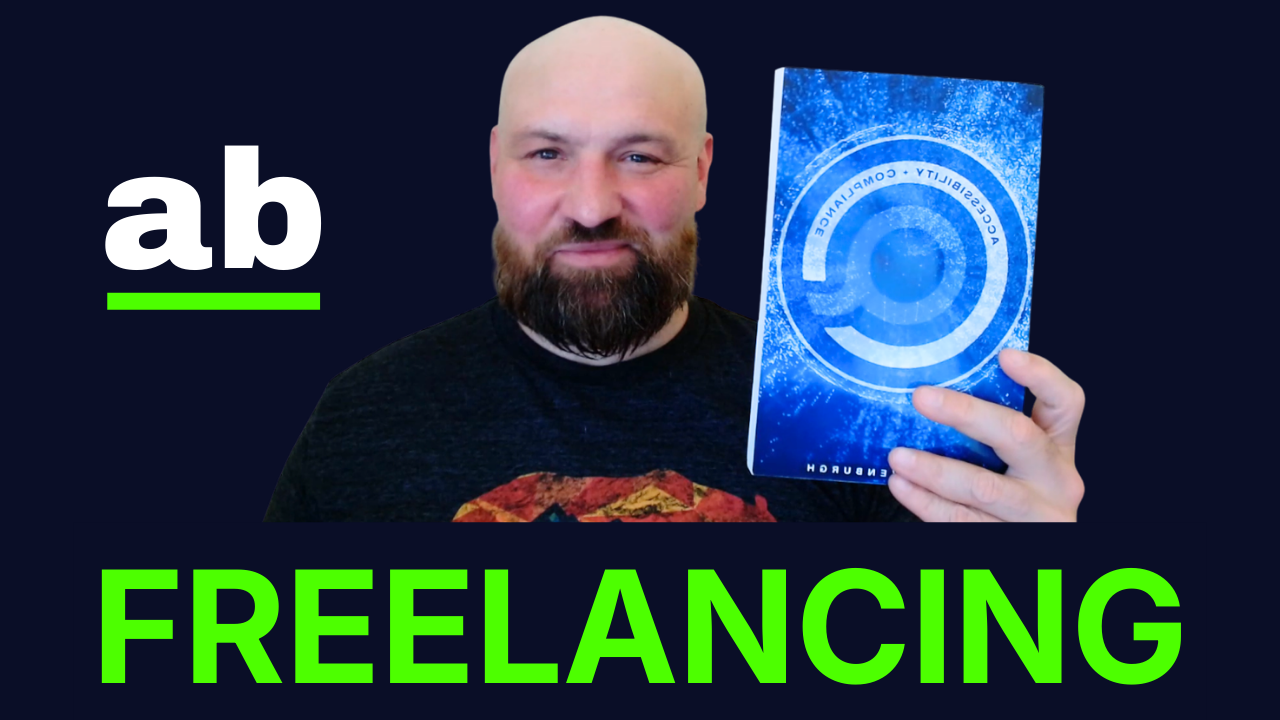
What does a freelance accessibility professional bring?
A freelance accessibility consultant typically works alone or with a small network of trusted collaborators. They complete audits, remediation guidance, VPAT preparation, user evaluation coordination, and training depending on their credentials and experience.
The advantage is direct contact. You talk to the person doing the work. Questions get answered quickly, and the auditor who identifies the issues is the same person explaining how to fix them.
Freelancers often hold credentials like CPACC, WAS, or DHS Trusted Tester certification. Many came from agency backgrounds and now operate independently with the same skill set at lower cost.
What does an agency bring?
Agencies have multiple auditors, project managers, and sometimes dedicated remediation engineers. They can take on larger projects, run parallel workstreams, and document processes that satisfy procurement and legal teams.
The agency model works well for clients who need a single point of contact managing scope, timelines, and deliverables across several digital assets. It also works for clients with formal vendor requirements, including insurance minimums, master service agreements, and procurement documentation.
The trade-off is cost and sometimes distance from the actual work. Account managers may sit between the client and the auditor, which can slow technical questions.
Which option fits a single WCAG audit?
A single WCAG 2.1 AA or 2.2 AA audit on a website or mobile app is often a good fit for a freelancer. The scope is contained, the deliverable is well-defined, and the cost difference can be significant. An experienced independent auditor can produce a report that maps issues to specific success criteria with clear remediation steps.
For a single audit, the auditor’s experience matters more than the size of the company behind them.
Which option fits VPAT and ACR work?
VPATs and ACRs can go either way. A freelancer with VPAT experience can complete an ACR for a SaaS product or web app once an audit has been conducted. Agencies offer this work as well, often bundled with the audit itself.
The deciding factor is usually whether the buyer asking for the ACR has preferences about vendor type. Enterprise procurement teams sometimes prefer agencies for documentation reasons. Smaller buyers care about the document itself, not who produced it.
Which option fits ongoing remediation and monitoring?
Ongoing remediation across a large portfolio usually points toward an agency. The work involves coordination, validation cycles, and frequent communication across development teams. An agency with project management capacity can absorb that load.
A freelancer can support ongoing work for a single product or smaller scope, but capacity limits show up quickly when several teams need parallel guidance.
How do costs compare?
Freelance rates for accessibility work typically range from $75 to $200 per hour depending on credentials and specialization. Project pricing for a focused audit can fall well below what an agency charges for the same scope.
Agencies carry overhead. Office costs, multiple staff, sales teams, and project management all factor into pricing. The same audit may cost two to four times more at an agency than from an experienced freelancer.
Higher cost is not the same as higher quality. It reflects different business structures.
What about risk and accountability?
Agencies often carry professional liability insurance, signed MSAs, and formal change-order processes. For risk-averse buyers, that structure has value.
Freelancers can carry insurance and sign contracts too, but the depth of legal infrastructure is usually lighter. For projects tied to active litigation or regulated industries, the formality of an agency can matter.
Frequently Asked Questions
Should I hire a freelancer or an agency for my accessibility audit?
If the scope is a single website, app, or product and budget matters, an experienced freelancer is often the better fit. If you have multiple assets, formal procurement requirements, or need ongoing program management, an agency makes more sense.
Are freelance accessibility audits lower quality than agency audits?
Not inherently. Quality depends on the auditor’s experience, credentials, and methodology. Many freelancers came from agency backgrounds and produce equivalent or stronger work because they are doing it directly rather than handing it off.
Can a freelancer issue a VPAT or ACR?
Yes. The VPAT is the template, and the ACR is the completed document. Any qualified accessibility professional can complete one after conducting an audit. What matters is the underlying evaluation, not the size of the company filling out the form.
How do I verify a freelancer’s accessibility credentials?
Ask for certifications like CPACC, WAS, or DHS Trusted Tester. Request sample audit reports with identifying information redacted. Check references from prior clients. A qualified freelancer will provide all three without hesitation.
What happens if a freelancer becomes unavailable mid-project?
This is the main agency advantage. Continuity. With a freelancer, build a contract that covers handoff documentation and partial deliverables. Many freelancers also have peer networks they can refer work to if needed.
The right choice is the one that matches your project’s actual needs, not the option that sounds safer on paper. Both freelancers and agencies produce strong accessibility work when the fit is right.
Contact Accessibility Base to find accessibility professionals for your project.