To study for the CPACC exam, start with the IAAP Body of Knowledge (BoK) as your primary source, build a weekly reading schedule over 8 to 12 weeks, and supplement with disability studies materials, WCAG reading, and practice questions. The exam covers three domains: disabilities, accessibility and universal design, and standards and laws. Most candidates pass by reading the BoK twice, taking structured notes, and reviewing legal frameworks like the ADA, Section 508, and EN 301 549 before test day.
The CPACC (Certified Professional in Accessibility Core Competencies) is a foundational credential from the IAAP. It tests conceptual knowledge, not hands-on technical skills. Your prep should reflect that.
| Area | What to Know |
|---|---|
| Primary resource | IAAP CPACC Body of Knowledge (free PDF from IAAP) |
| Prep time | 8 to 12 weeks for most candidates, 6 to 10 hours per week |
| Exam format | 100 multiple choice questions, 2 hours, remote or testing center |
| Passing score | Scaled score of 500 out of 800 |
| Key domains | Disabilities (40%), accessibility and universal design (40%), standards and laws (20%) |
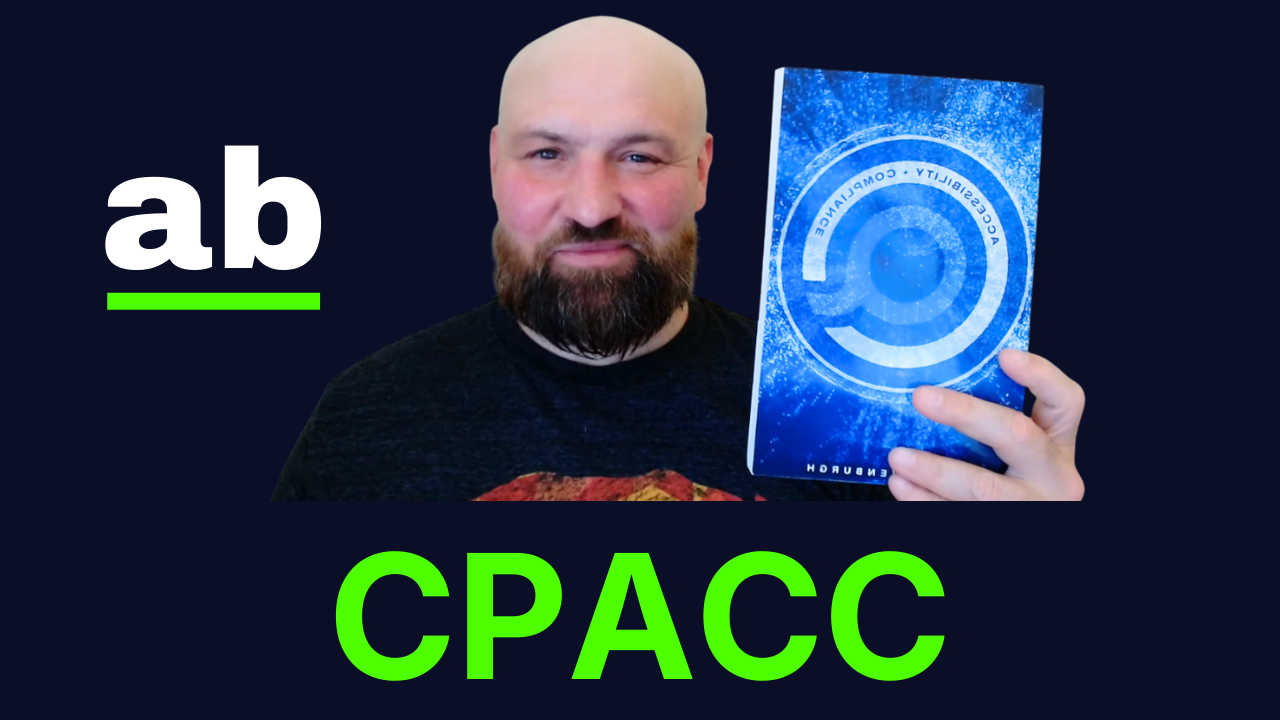
Start with the IAAP Body of Knowledge
The BoK is the canonical reference for the CPACC exam. Every exam question traces back to a concept covered in this document. Download it directly from the IAAP website at no cost.
Read it once straight through without heavy notetaking. This first pass gives you a mental map. On the second pass, slow down and take structured notes by domain.
The BoK is dense but not long. Most candidates finish the first read in 10 to 15 hours.
What topics does the CPACC exam cover?
The exam is organized into three domains. Your study time should roughly mirror their weight on the exam.
Disabilities covers categories of disability, models of disability (medical, social, biopsychosocial), and assistive technology. Expect questions on how different disabilities affect interaction with digital and physical environments.
Accessibility and universal design covers principles of universal design, accommodations, assistive technology categories, and accessible features in products and environments. This domain rewards conceptual fluency more than technical detail.
Standards and laws covers the ADA, Section 508, WCAG, EN 301 549, AODA, and related frameworks. You do not need to memorize every WCAG success criterion, but you should know the structure, principles (POUR), and conformance levels.
Build a study schedule
Most candidates benefit from an 8 to 12 week plan at 6 to 10 hours per week. Break it into phases.
Weeks 1 to 3: Read the BoK once. Skim supplemental materials. Do not evaluate yourself yet.
Weeks 4 to 7: Second read of the BoK with structured notes. Create flashcards for key definitions, legal frameworks, and disability categories. Begin practice questions.
Weeks 8 to 10: Targeted review. Focus on weak areas identified through practice questions. Re-read the standards and laws section.
Final week: Light review only. Rest before exam day.
Supplemental study materials
The BoK is enough to pass, but candidates who want deeper grounding often add these resources.
WCAG 2.1 and 2.2 documentation from the W3C, focusing on the four principles and conformance levels, is a strong starting point. Deque University’s CPACC prep course (paid, thorough) provides structured coverage. IAAP’s own CPACC prep webinars and study groups offer community-based learning. Disability studies overview texts give context on the social model and history of disability rights. Section 508 refresh overview and EN 301 549 summary documents round out the legal and standards knowledge.
Practice questions are the single most effective tool in the final weeks. They reveal which concepts you understand and which you have only memorized.
How long should you study for the CPACC exam?
Candidates coming from accessibility adjacent work (UX, web development, legal, HR) often need 40 to 60 hours of focused study. Candidates new to accessibility typically need 80 to 100 hours.
The exam is not designed to trick you, but it does require broad conceptual coverage. Rushing prep is the most common reason candidates do not pass.
Test day preparation
The CPACC is offered through remote proctoring or at Kryterion testing centers. If you choose remote, verify your system, camera, and quiet space well ahead of time.
You have two hours for 100 questions. That is 72 seconds per question, which is generous. Flag difficult questions and return to them rather than getting stuck.
Read every question twice. CPACC questions often hinge on a single qualifier like “best” or “primary.”
Frequently Asked Questions
Is the CPACC worth getting?
For accessibility consultants, auditors, UX professionals, and compliance roles, yes. The CPACC signals foundational fluency in accessibility concepts and is widely recognized by employers and clients. It is often a prerequisite for more specialized credentials like the WAS (Web Accessibility Specialist).
Can I pass the CPACC without any accessibility work experience?
Yes. The CPACC is a conceptual exam, not a practical one. Candidates with no professional accessibility background pass regularly by studying the BoK thoroughly and putting in 80 to 100 hours of prep.
What is the CPACC pass rate?
IAAP does not publish an official pass rate, but informal reports from study groups suggest most prepared candidates pass on the first attempt. Failed attempts are usually tied to insufficient prep time or skipping the standards and laws domain.
How much does the CPACC exam cost?
IAAP members pay a reduced exam fee compared to non-members. Pricing varies by region and membership status, so check the current IAAP rates before registering. Factor in membership cost if you plan to take additional IAAP exams later.
Should I take CPACC or WAS first?
CPACC first. The WAS assumes you already know the foundational concepts covered in the CPACC. Many candidates pursue CAS (Certified Accessibility Specialist) by passing both exams.
Preparing for the CPACC is less about memorization and more about building a working vocabulary for accessibility. Give yourself enough runway, read the BoK twice, and the exam follows.
Contact Accessibility Base to find accessibility professionals and resources in the directory.